Jenny leaves Riverdale and goes into hiding at Wildmoor
American WomanJenny leaves Riverdale and goes into hiding at Wildmoor after the precarious arrangement in Dick and Helen’s home becomes intolerable. Her departure is at once a practical escape and a careful severing: she wipes the household clean before she goes, then lets dwindling money, chance employment, and a false name determine the shape of her new life. The move takes her from a shared domestic space into rural isolation, where ordinary habits—collecting a newspaper, scanning its pages—become part of living as a fugitive.
Pressure in Dick and Helen’s Home
The arrangement lasts barely six months. During that time, Dick tries to draw Jenny into a closer relationship, describing her as someone who might have been a close friend under different circumstances. He also presses her to explain who she is and why she has disappeared, while framing the request as a way to reassure Helen, who, he says, tends to assume the worst. His joking speculation about whether Jenny might face multiple felony indictments, or merely have left because of a bad feeling, does not dissolve the pressure: even a partial account of her life would expose what she is trying to keep concealed.
The strain becomes immediate when Jenny wakes to find Dick leaning into her bed. He asks quietly whether she is sleeping well. Jenny gets up, tells him that she is, and recoils until he returns to his own room. The account does not describe a further confrontation, but her response makes plain how sharply the household’s intimacy has shifted from uneasy to invasive. His earlier requests for information and this nighttime intrusion belong to the same narrowing space: Jenny cannot preserve her secrecy and feel at ease there.
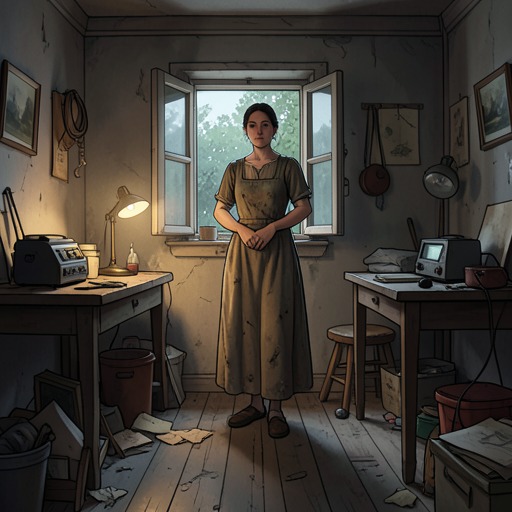
The next morning, after both Dick and Helen have gone to work, Jenny packs her bag, puts on cleaning gloves, and wipes the house. The labor takes hours and proceeds object by object: every fork, knife, spoon, and utensil in the kitchen drawers; the spice containers; the Tupperware in the refrigerator; then rooms and things she had never touched before. She even cleans a framed Rockwell Kent engraving and the Paul Robeson records. The painstaking inventory turns departure into a final act of housework, but its thoroughness also gives the leaving a stark form: Jenny cleans the familiar space as if closing it behind her. She saves the bathroom until last and stands over the toilet she has cleaned weekly on her knees. Only then does she feel she has truly seen it. She wipes it once more and leaves.
A Destination Chosen by Money and Chance
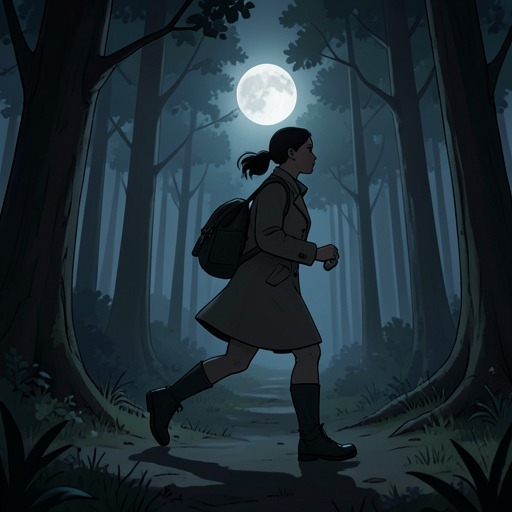
Jenny chooses Rhinecliff at random, deciding to go wherever one fourth of her money will carry her. The distance is not great. She arrives with a duffel bag and an accordion file, and waits for a long time on the deserted station platform, looking toward the river that had accompanied the train from New York. She smells rotting vegetation and brine; though the ocean is now two hours farther away, its smell seems stronger at low tide. The small discrepancy between distance and sensation gives her arrival an unsettled quality: she has moved, but not into security or a clearly chosen future.
From the station she takes a taxi and asks for the nearest motel. There is only one, miles inland near Rhinebeck, and its cost takes another large portion of her funds. The next day, an advertisement in the Rhinebeck Gazette offers work at Wildmoor. The opening is available not because the job has just appeared, but because the advertisement has run for months without attracting a response: Dolly rarely pays, a fact widely known in town. Jenny does not know this when she accepts. As an immigrant without local knowledge or alternatives, she agrees to take board as part of her pay. Her route into hiding thus depends on a combination of limited money, an unpromising motel, and a job whose disadvantages have already discouraged others.
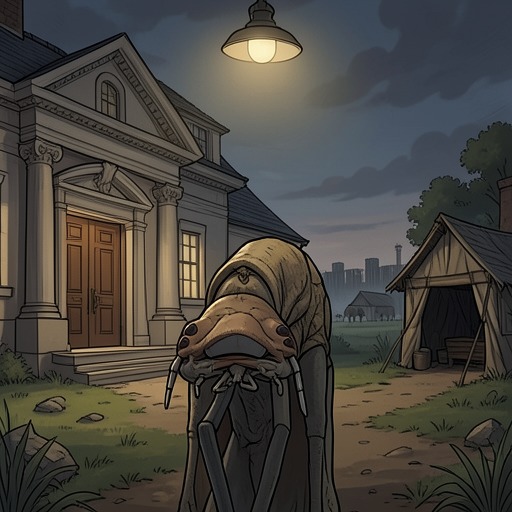
Jenny reaches Wildmoor in late October 1972. She remembers the Nixon placards at the ends of the secretive drives that branch from the long country road and disappear through yellow-leaved woods. The signs and the concealed drives set the scene for a life organized around withdrawal: the estate is reached from the road, yet tucked away from it. Her arrival is not presented as a triumphant escape into freedom. It is a provisional refuge secured through work and board, entered by someone who has few choices and cannot openly use her own identity.
Iris Wong and the Newspaper Ritual
Jenny chooses Red Hook for her post-office box because it is barely a town. The post office stands alone just beyond a desolate intersection, and from flyers on its bulletin board she guesses that it serves scattered farms. She calls herself Iris Wong and subscribes to the Rhinebeck Gazette. The name gives her a usable public identity; the box and the small settlement give her a way to receive news without making the newspaper part of the household at Wildmoor.
Two or three evenings a week, after the post-office window has closed, she drives to Red Hook and takes the slim stack of papers to a neglected riverside park. A single vandalized picnic table stands there, but she neither sees anyone use it nor sits at it herself. She reads in the car. At first she opens each paper to the national-news page and scans the Associated Press summaries with narrowed eyes and her head slightly turned, as though the print itself might strike her blind. She is looking for a report about herself. When none appears, she starts again more calmly and reads from beginning to end.
The Gazette offers little about the larger world or even the Rhinebeck area beyond church spaghetti-dinner announcements and advice for keeping Canada geese off lawns. Jenny nonetheless enjoys the newspaper’s narrowness. Its local details help her become familiar with the small world in which she is now confined; she imagines herself as a prisoner who can do no more, for the moment, than learn her cell. The metaphor complicates the apparent safety of hiding at Wildmoor. Concealment protects her from exposure, but it also makes her own movements and knowledge feel bounded.
The Wider War and the Limits of Refuge
By November and December, and into the New Year, Jenny’s newspaper routine becomes a lazy indulgence. She leaves the car engine running, turns up the heat and radio, and smokes at least half a pack of cigarettes while she reads. The gradual easing of her initial alarm is a change in habit, not an end to her fugitive condition: the ritual still takes place in the car, away from the post-office window and the empty park table, and she remains alert to what the papers might say about her.
At the beginning of February she reads a newspaper dated January 28, 1973, reporting that cease-fire agreements have been signed in Paris to end the Vietnam War. The article, reprinted from the Times, describes the clothes worn by the people present, including the amber embroidered dress of the Vietcong provisional government’s foreign minister and the contrasting outfit of the Secretary of State’s wife. Jenny’s attention to those details sits beside a harsher personal fact: the man she loves is in prison, and she remains a fugitive for actions taken to protest—and, in her own revised understanding, to demolish—the war. A public conflict can be declared concluded while its private consequences continue. The cease-fire does not return Jenny to the person she was before leaving, release the man she loves, or make her refuge feel like freedom.